
Women Report Fewer Memory Issues Following DASH Diet
A new study found that women in their 40s who closely followed diets designed to lower blood pressure were 17 percent less likely to experience memory loss and other signs of cognitive decline decades later.
The decades-long study, led by researchers from the NYU Grossman School of Medicine, involved participants following the Dietary Approaches to Stop Hypertension (DASH) diet. Described as a flexible, balanced, and heart-healthy eating plan, the DASH diet is one of U.S. News & World Report’s top expert-recommended diets.
“Subjective complaints about daily cognitive performance are early predictors of more serious neurocognitive disorders such as Alzheimer’s disease,” Yu Chen, professor in the Department of Population Health and senior author of the study, said in a press release. “With more than 30 years of follow-up, we found that the stronger the adherence to a DASH diet in midlife, the less likely women are to report cognitive issues much later in life.”
High blood pressure, especially in middle age, can increase the risk of dementia. Interestingly, women make up over two-thirds of those diagnosed with Alzheimer’s disease, the most common form of dementia, according to the Alzheimer’s Association.
Alzheimer’s is a progressive disease that affects memory, thinking, and behavior. Symptoms worsen over several years and eventually become severe enough to interfere with daily tasks.
The Alzheimer’s Association also reports that an estimated 7.4 million Americans age 65 and older are living with Alzheimer’s disease in 2026. This number is expected to nearly double by 2060, barring a medical breakthrough.
According to a study from the NYU Grossman School of Medicine, following the DASH diet can help reduce the risk of cognitive problems.
“Following the DASH diet may not only prevent high blood pressure, but also cognitive issues,” Fen Wu, a senior associate research scientist and co-lead of the study, said in a press release.
The DASH diet was developed by a group of doctors, registered dietitians, and nutrition researchers, with support from the National Heart, Lung, and Blood Institute (NHLBI), which is part of the National Institutes of Health.
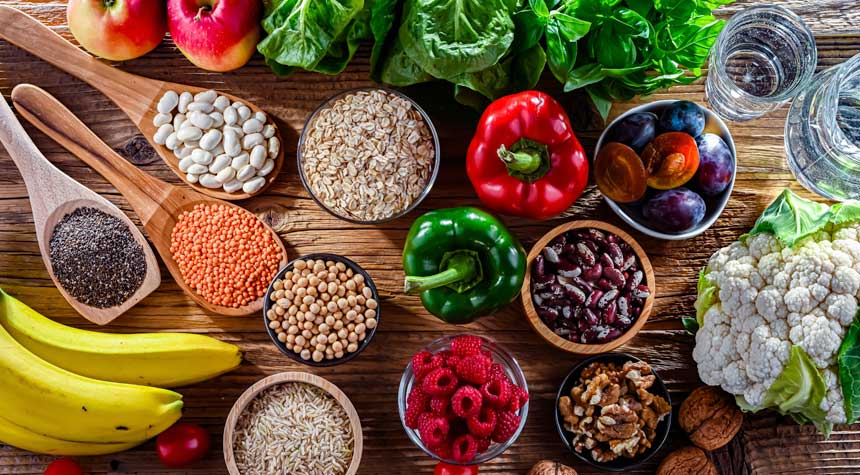
According to the NHLBI, the DASH diet consists of eating:
-
• Whole grains
• Vegetables
• Fruits
• Fat-free or low-fat dairy
• Fish
• Poultry
• Beans
• Nuts and seeds
• Vegetable oils
The diet also limits foods that are high in saturated fat, such as fatty meats, full-fat dairy products, and tropical oils such as coconut, palm kernel, and palm oils. Sugar-sweetened beverages and sweets are also limited foods within DASH.
DASH diet foods are good sources of potassium, calcium, magnesium, fiber, and protein, and are low in sodium, sugar, and unhealthy fats.
About the Study
The researchers analyzed data from 5,116 medical records of more than 14,000 women enrolled in the NYU Women’s Health Study. The investigators focused on the impact that lifestyle and other factors had on the development of cancer among women, as well as other chronic conditions.
To get a sense of what the study participants were eating, the researchers had the women complete questionnaires about their diet when they enrolled in the study between 1985 and 1991. The women were, on average, about 49 years old.
The participants were followed for more than 30 years and then asked to report any cognitive complaints. The average age of the women was 79. Participants who did not return questionnaires were contacted by phone.
The study assessed self-reported cognitive complaints using six standard, validated questions known to indicate later mild cognitive impairment, which can lead to dementia. These questions were about:
-
• Difficulties remembering recent events and shopping lists
• Understanding spoken instructions or group conversations
• Navigating familiar streets
Among the six cognitive complaints, 33% of participants reported having more than one cognitive issue. Women who closely followed the DASH diet were about 17 percent less likely to report multiple complaints, according to researchers.
In an interview with Good Morning America, Dr. Genevieve Jing, a resident in the ABC News medical unit, noted that the participants’ cognitive complaints were all self-reported and lacked clinical assessment. Dr. Jing also pointed out selection bias because of deaths, people not responding, and those who did not continue with the study.
The investigators said further research is needed across different racial and ethnic groups to determine whether the findings can be applied broadly.
But for now, the investigators suggest adopting a healthy eating plan in middle age, as it may benefit decades later.
“Our data suggest that it is important to start a healthy diet in midlife to prevent cognitive impairment in older age,” Yixiao Song, a lead author of the study, said in a press release.
Source Links:
https://nyulangone.org/news/women-heart-healthy-diet-midlife-are-less-likely-report-cognitive-decline-later
https://www.goodmorningamerica.com/food/story/women-dash-diet-midlife-reported-memory-problems-older-104168170
https://health.usnews.com/best-diet/dash-diet
https://www.alz.org/alzheimers-dementia/facts-figures
https://www.nhlbi.nih.gov/health/dash-eating-plan


